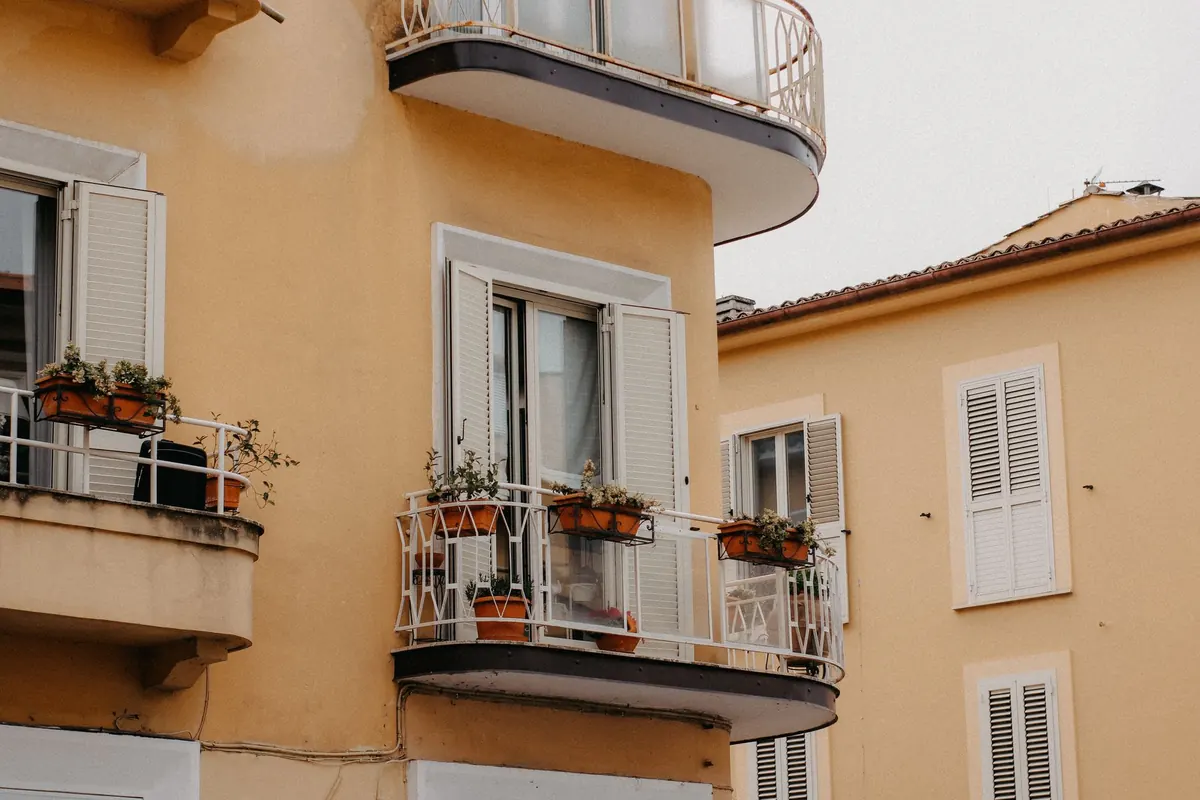
A balcony is a strange kind of garden. It bakes in the afternoon, funnels wind between buildings, and offers exactly as much root room as you decide to give it. Dwarf cypress suits that bargain better than most plants. These are compact, upright conifers with a strong vertical line, and they look settled in a pot within a season rather than taking years to justify their space. Get the basics right — the right cultivar, a pot with real volume, a free-draining mix, and a plan for wind — and a single cypress can anchor a balcony for a decade or more.
What follows is the practical version: what to buy, how to plant it, and how to keep a containerised cypress healthy through heat, gales and the thin, dry air of a fourth-floor terrace.
The word "dwarf" on a plant label is a promise with an asterisk. It means slower and smaller than the species, not necessarily small. Read the eventual height and, more importantly, the growth rate. A cultivar that reaches two metres in ten years is manageable in a large pot; one that adds half a metre a year is not.
Three groups are widely sold and behave differently in containers:
Buy in spring or early autumn so the plant has time to root out before the extremes arrive. Choose a specimen with a straight leader, dense growth down to the base, and no brown patches inside the foliage — those patches often mean the plant has already been dried out or waterlogged at the nursery, and they do not green up again.
Balconies are windier than gardens at ground level, and upper floors are worse. A narrow columnar cypress catches wind like a sail, so on an exposed balcony favour a cultivar with denser, shorter growth and a broader base rather than an extreme pencil shape. If your balcony is a wind tunnel, plan for a lower, bushier form and accept that the tall exclamation mark belongs on a sheltered terrace.
The most common container failure is a pot that is too small. Cypress roots spread and go deep, and a cramped pot dries out within hours in summer, which is far more damaging than a slightly oversized container looks.
For a plant expected to stay two metres tall, aim for a container of at least 50–60 cm across and similarly deep. For a compact specimen under a metre, 40 cm is a sensible minimum. Terracotta looks superb and breathes well, but it is heavy, frost-sensitive in cold winters and dries fast; glazed stoneware or thick-walled plastic is more forgiving. Whatever you choose, check that it has drainage holes, and raise it slightly on pot feet so water can escape and air can move underneath.
Weight matters on a balcony. Soil, pot and a mature cypress add up quickly, and a saturated pot is far heavier than a dry one. If you are unsure what your balcony structure can carry, ask the building's engineer or manager before you fill three large pots. It is a boring question with an occasionally very important answer.
Resist the urge to crowd several cypress into one container for instant effect. They compete for water and light, the weaker one declines invisibly for a year, and repotting a tangled group is miserable work. One specimen per pot, underplanted with something shallow-rooted if you like, is the cleaner arrangement.
Cypress wants a free-draining, slightly acidic to neutral mix that holds moisture without staying wet. Ordinary garden soil in a pot compacts into a brick. Peat-free multipurpose compost alone stays too wet and collapses in structure after a season. The workable blend is roughly two parts soil-based or peat-free potting compost to one part drainage material — horticultural grit, fine bark, or coarse pumice — with a handful of slow-release fertiliser for the first season.
Do not add a deep layer of rubble at the bottom "for drainage". It creates a perched water table and makes the base of the pot wetter, not drier. Drainage holes and a coarse mix do the job.
In the first season, water when the top few centimetres of mix feel dry. From the second year onward, cypress in a pot needs regular deep watering through warm weather — soaking until water runs out, then letting the surface dry slightly. Little and often is the wrong approach; it wets the surface and leaves the lower roots parched.
Feed lightly. A slow-release granular feed in spring suits conifers better than a heavy liquid regime, which pushes soft growth that wind then shreds. Stop feeding by midsummer so new growth can harden before winter.
Wind and sun strip moisture from foliage faster than roots can replace it. On hot, breezy days, check the pot in the evening; a container that felt heavy in the morning can be alarmingly light by dusk. Grouping pots together creates a slightly moister microclimate and reduces wind buffeting on the plants themselves.
You cannot stop wind on a balcony, but you can break it. A slatted screen, a row of lower pots, or a fixed planter box along the railing all slow airflow at plant height without creating a solid barrier that turns the whole balcony into a sail. Tie a tall specimen to a sturdy stake set into the pot for its first two years, using soft ties that will not cut into the bark.
Trim lightly in late spring, taking out any damaged or wayward shoots and shortening the leader only if you genuinely need to limit height. Do not shear cypress into tight shapes — the cut foliage often browns and stays brown.
Repot every three to four years, or when roots start circling the drainage holes. Move up one pot size at most, tease out the outer roots, and replace a third of the old mix with fresh. Early autumn is the best moment; the roots are still warm and active, and the plant has the winter to settle.
In cold regions, insulate the pot by wrapping it in hessian or bubble wrap and move it against a sheltered wall. The roots of a containerised cypress are far more exposed to frost than those of a planted one.
Check your chosen cultivar's mature size before you buy, and be honest about how much sun and wind your balcony actually receives rather than how much you wish it did. Buy the largest pot you can lift safely, plant with grit and patience, water deeply rather than often, and give the plant a windbreak for its first two winters. A dwarf cypress will not reward neglect, but it will reward consistency — and a well-grown one gives a balcony the one thing pots usually lack: a vertical, evergreen spine that holds through every month of the year.
Photo: Nati / Pexels

A practical troubleshooting guide to the most common urban tree watering errors during heat waves — frequency,...

Columnar cypress can screen a narrow driveway without turning it into a tunnel. Here is how to choose, lay out, and...
Mulch is the cheapest help a street tree gets—and one of the easiest ways to harm it. Here's how deep, where to...

Italian city trees and green spaces.
