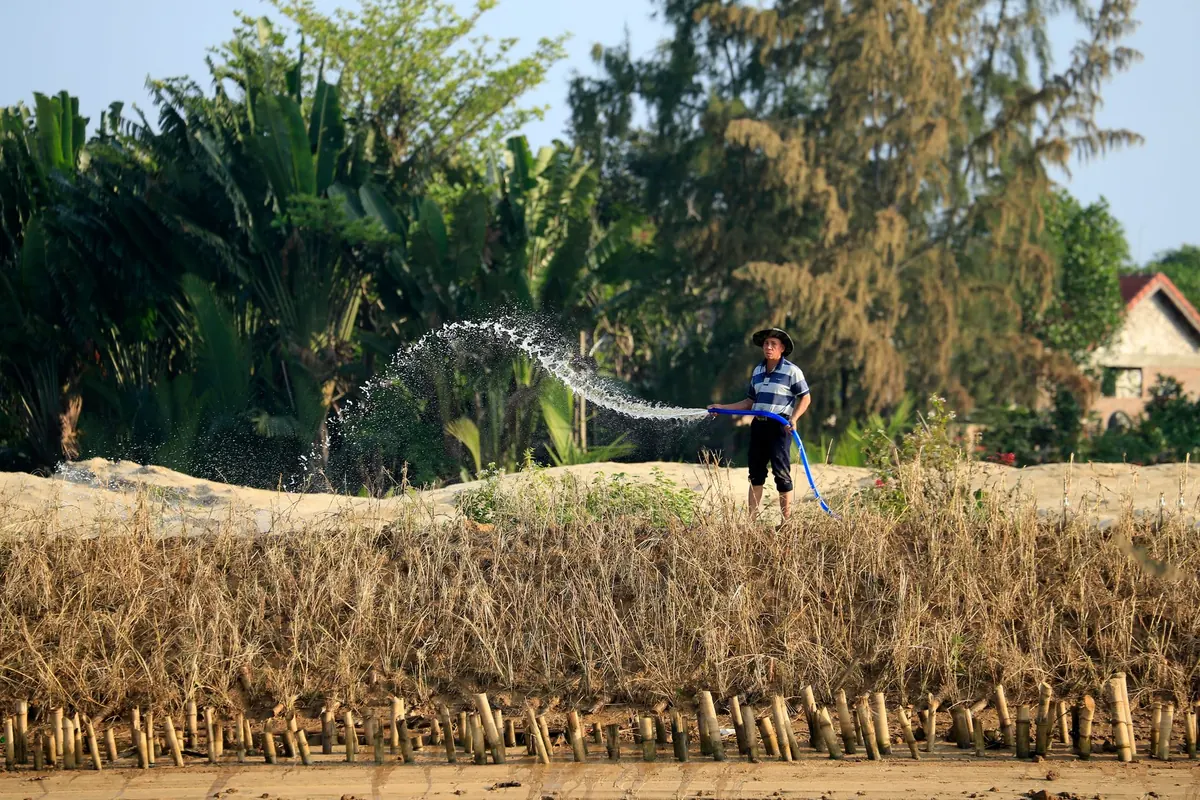
By the third day of a heat wave, most street trees are not suffering from a lack of attention. They are suffering from the wrong kind. Someone on the block has been out every evening with a hose, giving each trunk a quick wash and a damp patch of pavement, while the soil a spade's depth down is still powder. Others have propped a sprinkler against a fence and let it run, and most of that water is heading for the storm drain. Heat waves are hard on trees. We do not need to make them harder.
What follows is a troubleshooting guide rather than a schedule. Every site is different — a young tree in a raised planter dries out faster than a mature cypress in open ground — so the aim is to help you read the conditions in front of you and adjust. If your trees look tired in August, one of these mistakes is probably behind it.
The most common error is frequency. Someone decides a tree needs water every second evening, or twice a week, and sticks to it through June, July and August regardless of rain, temperature, soil type or the size of the tree. A fixed rhythm feels responsible, but it is guesswork dressed up as a plan.
Irrigation frequency should follow soil moisture, not the day of the week. During a heat wave that might mean watering a newly planted street tree every two or three days, while an established tree nearby may need a deep soak once a week or less. Sandy soils drain quickly and need smaller, more frequent drinks. Clay holds water, so a heavy soak can last considerably longer — and can also drown roots if repeated too soon.
Before you unwind the hose, put a finger or a narrow trowel into the soil about 15 centimetres down, away from the trunk and under the edge of the canopy. Dry and crumbly means water. Cool and moist means wait. That single check will save more trees than any timer.
A five-minute spray wets the surface, darkens the mulch and makes everyone feel better. It also does almost nothing. Tree roots that matter for drought survival sit well below the surface, and light watering encourages roots to stay high, where the heat is most brutal.
You want a slow, deep soak that penetrates 20 to 30 centimetres. The practical way to do this is to run a hose at a trickle — not a torrent — at the drip line, moving it around the root zone every 15 minutes or so. A soaker hose coiled around the tree works well if you have one. On a slope, water in pulses and let each pulse sink in before starting the next.
It helps to know your flow rate. Time how long it takes to fill a 10-litre bucket from the tap setting you plan to use, then you can estimate how long a proper soak takes instead of standing there guessing. For most household hoses on a low setting, a deep watering of a young tree takes far longer than people expect.
Water the soil, not the tree. Trunks and leaves gain nothing from a hose; the fine roots below the drip line gain everything.
Urban soils become compacted and, after a dry spell, can turn water-repellent at the surface. Water beads up, runs along the crust and disappears down the gutter while the root ball underneath stays bone dry. This is why two people can water the same tree for the same amount of time and get completely different results.
Watch the ground while you water. If puddles form within a minute and start creeping toward the kerb, you are losing most of what you apply. Fix it like this:
Surface appearance lies. Mulch can look dry on top while the soil beneath is wet, and a dark patch can be the result of a neighbour's overflow. Moisture meters are handy for spotting trends, but the cheap ones drift badly and read differently in clay, sand and potting mix. Treat them as a second opinion, not a verdict.
The reliable tests are simple. Push a long screwdriver or a thin metal rod into the soil: it slides in easily where moisture is present and resists where it is dry. Dig a small hole with a trowel, feel the soil at depth, then close it back up. Look at the tree itself as supporting evidence — curled or upward-folded leaves, dull foliage, early leaf drop and dieback at the tips all point to water stress. But do not confuse heat wilting at midday, when leaves droop to conserve water and recover by evening, with genuine drought damage.
Watering at midday is not the disaster people claim, but much of it evaporates before it reaches the roots, so early morning is the better habit. Late evening is the second choice. What matters more is where the water goes. A common mistake is soaking the trunk and the base, which invites rot and does little for the roots spreading out beneath the canopy.
Aim for the drip line and beyond — roughly the area under the outer edge of the branches, and a little past it. On a young tree, that is a modest circle; on a mature one, it may be several metres across, and a hose left in one spot will not cover it. Move the water around. And keep the trunk dry, especially where bark is thin or already damaged.
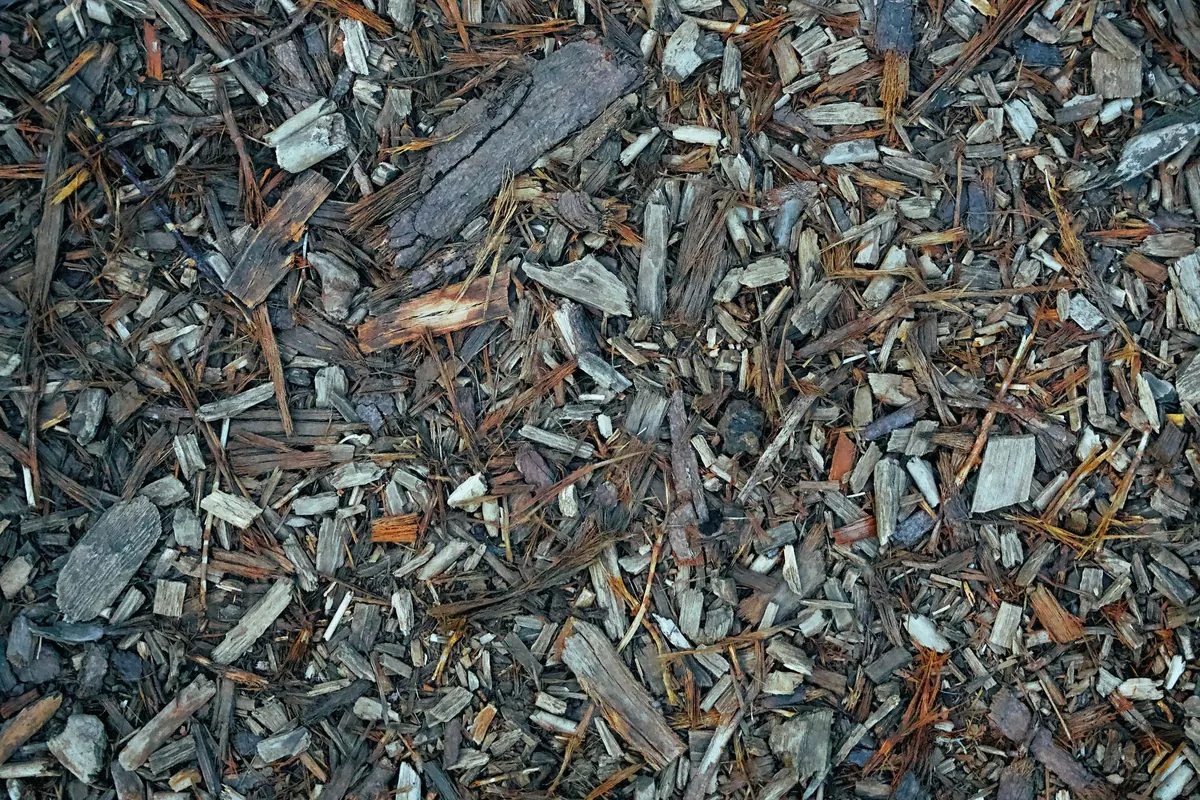
Mulch is the quiet partner to all of this. A layer of organic mulch 5 to 8 centimetres deep over the root zone slows evaporation, keeps the soil cooler and reduces runoff. Pull it back a few centimetres from the trunk so the bark can breathe.
Heat makes us want to do more, and doing more is sometimes the problem. Roots need air as well as water. In heavy clay or a poorly drained planter, daily watering during a hot spell can leave the root zone waterlogged, and the symptoms — yellowing, leaf drop, dieback — look uncomfortably similar to drought stress. People see a struggling tree, water it again, and make things worse.
If the soil is wet at depth and has been for days, stop. Let it dry to the touch before the next soak. In containers, check that drainage holes are clear. On waterlogged ground, do not add more water; instead, improve surface drainage and wait.
Check before you water — finger, trowel or screwdriver, 15 centimetres down, at the drip line. If it is dry, soak slowly and deeply, in pulses, watching for runoff and breaking the crust if water is beading. Water early, keep the trunk out of it, mulch the root zone, and then leave the tree alone until the soil tells you otherwise. During an extreme heat wave, an extra pass for young and newly planted trees is sensible; established trees usually need less than we give them.
If a tree is showing severe decline, dieback or sudden leaf loss after a heat event, it is worth asking a qualified arborist to look at it — the cause is not always water, and the wrong correction can do real harm.
Photo: Jeffry Surianto / Pexels

Columnar cypress can screen a narrow driveway without turning it into a tunnel. Here is how to choose, lay out, and...
Mulch is the cheapest help a street tree gets—and one of the easiest ways to harm it. Here's how deep, where to...
A practical guide to growing dwarf cypress in pots on a balcony, from choosing the right variety and container to...

Italian city trees and green spaces.
