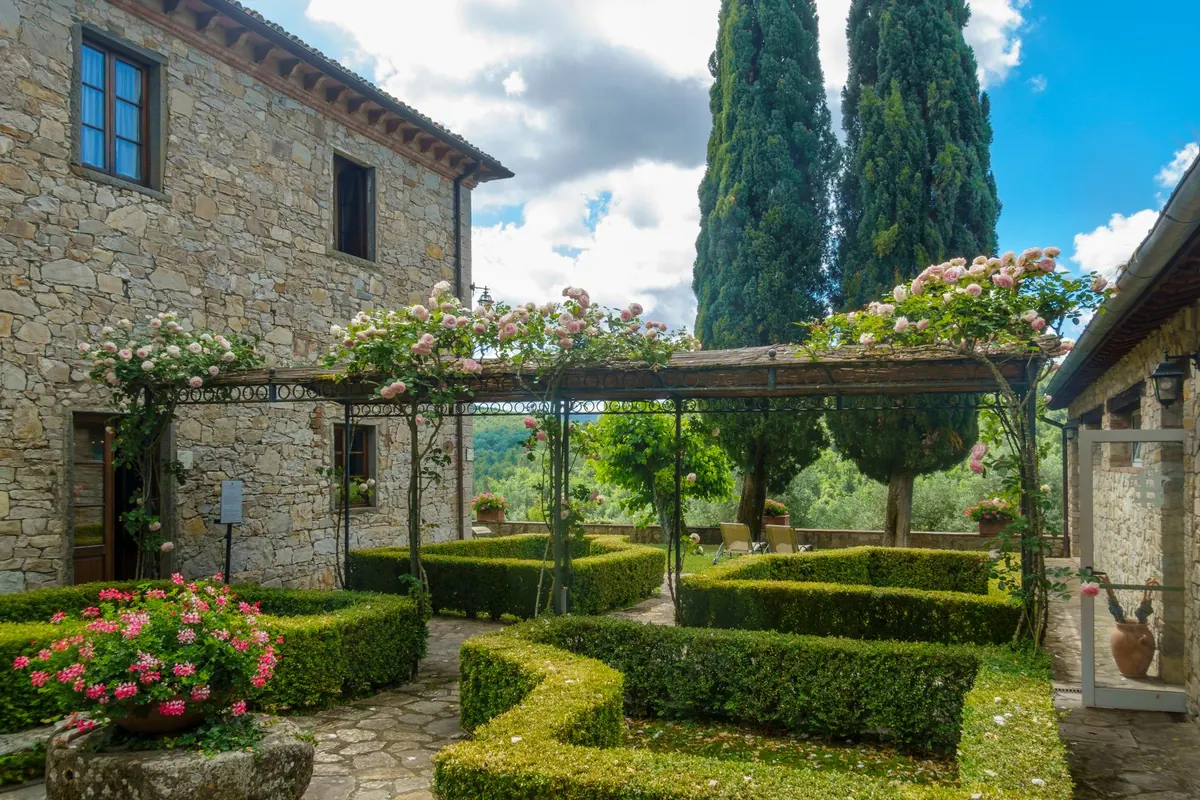
A narrow strip beside a wall, a boundary you would rather not look at, two conifers that seem interchangeable in the nursery. That is where most decisions between Italian cypress and Leyland cypress begin. Give them five years and the difference is plain. One becomes a dark green column that hardly leans; the other becomes a wall that grows faster than you can trim it. Both make credible urban hedges, but they ask for different amounts of space, time and nerve. What follows is a working comparison for courtyards, car park edges, school boundaries and tight residential plots.
From a distance both read as dense evergreens with fine, dark foliage. Up close, their geometry is completely different, and that geometry decides where you can plant them.
The classic Mediterranean exclamation mark. Branches rise almost vertically, so the tree gains height far faster than width. A mature specimen may reach twelve metres or more while staying barely a metre and a half across. Compact selections such as 'Totem' are tighter and slower still, and are the ones most often used for narrow screens. Expect 30–60 cm of growth a year once established, and very little in the first two seasons while the roots settle.
A chance hybrid that appeared in a Welsh garden in the late nineteenth century, and it grows like a plant in a hurry. Sixty to a hundred centimetres a year is normal on decent soil; young plants can do more. Left untrimmed it becomes a broad, billowing tree of twenty metres with a spread to match. Clipped twice a year it will hold a hedge width of roughly 1.5 m, but it is always pushing outward. This is not a column. It is a wall with rounded shoulders.
Italian cypress is bought with patience; Leyland is bought with time saved now and paid for later. That trade-off shows up in planting distances.
One practical note on height. A Leyland hedge that is allowed to creep past three metres becomes a ladder job or a contractor bill. Decide the finished height before you plant, and hold it from the first year rather than trying to bring it down later.
Leyland cypress wants two, sometimes three clips a year once it is growing strongly: sides in early summer, the top again in late summer if you are keeping it formal. Each cut is real work, and the clippings are bulky. Italian cypress usually needs one light trim a year, with hand shears, taking only a few centimetres off the sides and the leading shoots.
Neither tree regenerates from old, bare wood. If you cut a Leyland back into the brown interior, the hedge may stay hollow for years; on Italian cypress the same mistake leaves permanent gaps in a plant that is meant to be a solid column. Keep the shears on the outside of the green, always. Trim on a dry day, and clean the blades between trees with alcohol or a diluted bleach solution if you have had disease nearby.
Shape matters for both. Aim for a top slightly narrower than the base so light reaches the lower foliage, and resist the urge to shave the sides flat to a string line every year without letting the hedge breathe.
The serious problem is cypress canker, which shows as sunken, resin-oozing patches on stems followed by dieback of individual branches. There is no reliable cure once it takes hold: cut out affected wood well below the lesion, clean your tools, and buy stock from a nursery that grows it clean. Root rot in waterlogged winter soil and drought stress in the first summer are the other two risks. Good drainage and full sun prevent more trouble than any spray.
Cypress aphid is the classic complaint: in late spring and early summer colonies feed under the foliage, leave honeydew and sooty mould, and by August whole patches have turned brown. Honey fungus and Phytophthora root rot take established hedges in wet ground. Fast growth also produces soft, sappy shoots that are easily damaged by salt wind and hard frost, and because the tree roots relatively shallowly for its size, tall exposed specimens can go over in a gale.
In both cases, keep a mulch ring clear of the trunk, water in dry spells rather than feeding heavily, and avoid high-nitrogen fertiliser that pushes soft growth into the autumn.
As a screen, Italian cypress gives you a narrow, fine-textured band of green and a shadow that stays close to the boundary. That matters in a small garden, where a wide evergreen hedge can eat a metre of growing space along its whole length. Leyland gives you opacity faster and thicker, but it also casts a heavy, dry shade and takes a lot of moisture and nutrients from the soil around it.
Before planting anything that will top three metres, read your local rules on boundary hedges and green-space planting, and talk to the person whose light you will change. Keep Leyland well clear of foundations, drains and paving, and if you are worried about a mature hedge close to a building, get an arboriculturist or structural engineer to look at it rather than guessing.
Most failures with both trees happen in the first fortnight, not in year ten.
Get the spacing and the drainage right and both trees will do what you asked of them. The real choice is between a slow, narrow column you shape once a year and a fast, generous wall you hold back for a decade.
Photo: tommy picone / Pexels

A practical troubleshooting guide to the most common urban tree watering errors during heat waves — frequency,...

Columnar cypress can screen a narrow driveway without turning it into a tunnel. Here is how to choose, lay out, and...
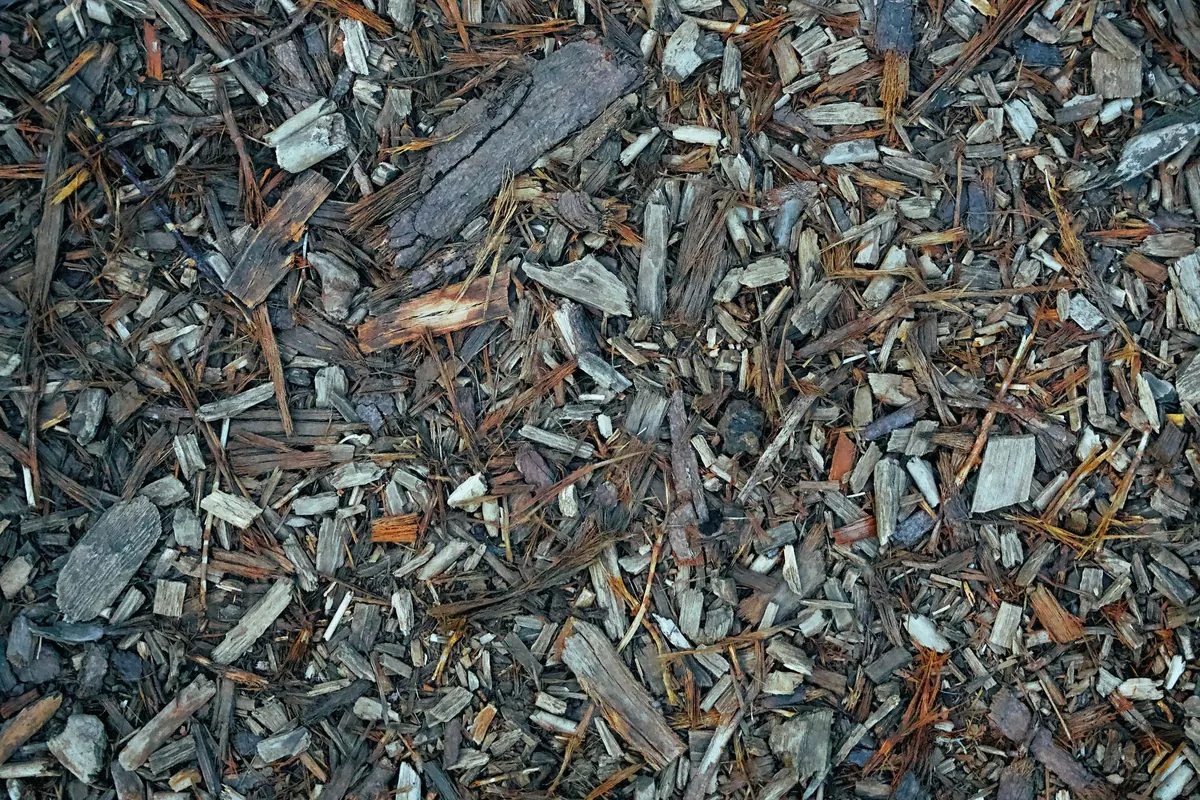
Mulch is the cheapest help a street tree gets—and one of the easiest ways to harm it. Here's how deep, where to...

Italian city trees and green spaces.
